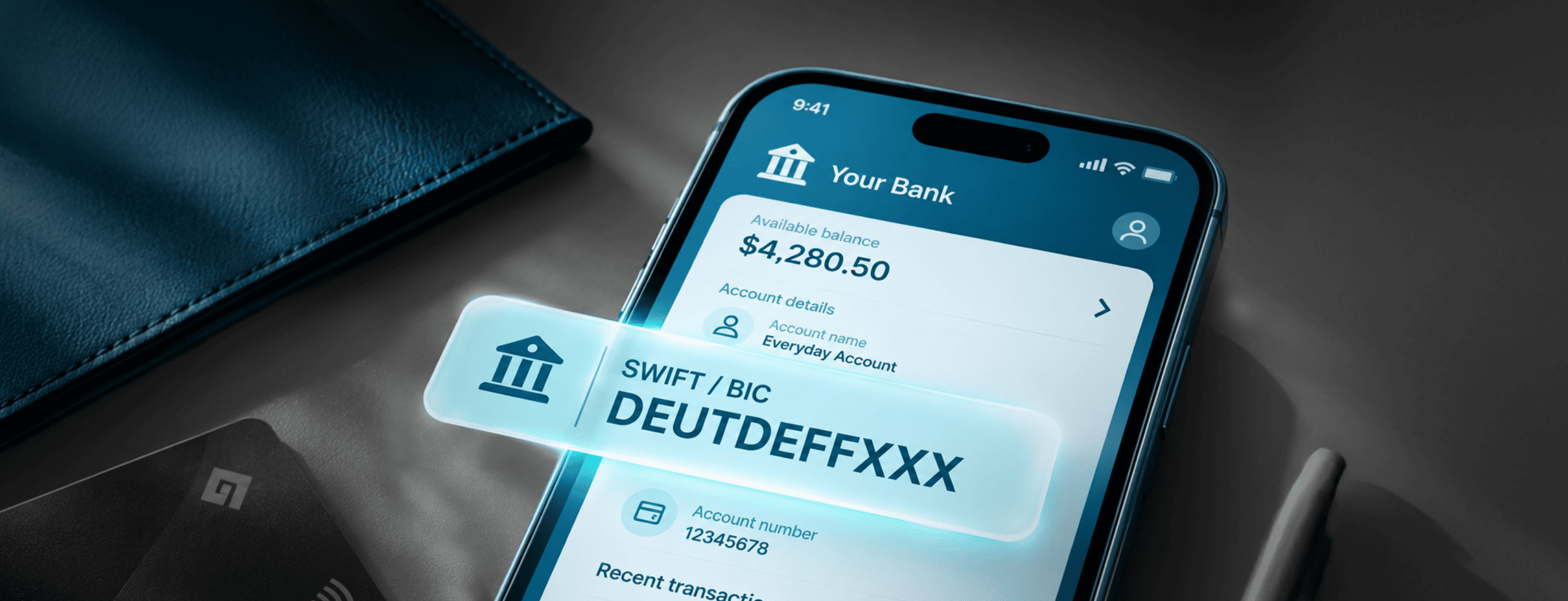
A BIC number, also known as a SWIFT code, is an international identifier used to identify a bank or other financial institution when processing financial transactions. It helps ensure that payment instructions are directed to the correct institution, particularly when money moves between countries.
BIC stands for Business Identifier Code and is usually made up of 8 or 11 letters and numbers. You may be asked to provide one when sending or receiving an international bank transfer, alongside other details such as the recipient's name, account number or IBAN.
If you're preparing to send money overseas, understanding what a BIC is, where to find it and how it differs from an IBAN can help you provide the correct banking information and avoid unnecessary payment delays.
Key Takeaways
- BIC stands for Business Identifier Code and identifies a financial institution or other registered organisation.
- A BIC is usually 8 or 11 alphanumeric characters long.
- BIC and SWIFT code are commonly used to refer to the same identifier.
- A BIC identifies the institution, while an IBAN identifies a specific bank account.
- You can usually find your bank's BIC through online banking, account statements or by contacting the bank.
What Is a BIC Number?
A BIC number is a unique identifier assigned to an organisation to help identify it during financial transactions and other business communications.
BIC formally stands for Business Identifier Code, as defined by the ISO 9362 international standard. Although it is commonly called a Bank Identifier Code in banking, its official name is broader because it can identify financial and non-financial institutions.
When you make an international bank transfer, the BIC helps identify the recipient's bank or financial institution. This allows payment instructions to be routed to the appropriate institution.
For example, if someone in the UK wants to send money to a bank account in Germany, the recipient may need to provide their bank's BIC alongside their account details. The sending bank uses the information to identify the receiving institution.
A BIC does not identify an individual's bank account. Instead, it identifies the organisation associated with the financial transaction.
What Does a BIC Number Look Like?
A BIC consists of either 8 or 11 alphanumeric characters. Each part provides information about the organisation, its country and its location. An optional final section identifies a specific branch or organisational unit.
For example, consider this illustrative BIC: DEUTDEFFXXX
It can be broken down into four parts:
Here's what each section means:
- Institution code: The first four characters identify the bank or organisation. They are alphanumeric.
- Country code: The next two letters identify the country where the organisation is registered, using the ISO country-code standard.
- Location code: The following two characters identify the organisation's location or registration details. They can contain letters or numbers.
- Branch code: The final three characters are optional and can identify a particular branch, department or organisational unit.
An 8-character BIC contains the first three sections. An 11-character BIC includes the additional branch identifier.
The example above is for explaining the structure; always confirm the actual BIC with the relevant financial institution before making a payment.
What Is the Difference Between a BIC and a SWIFT Code?
BIC and SWIFT code are generally used interchangeably in banking. Both commonly refer to the same 8- or 11-character identifier used to identify a financial institution.
The difference is mainly in the terminology:
- BIC: Stands for Business Identifier Code. It is the formal name of the identifier under the ISO 9362 standard.
- SWIFT: Refers to the Society for Worldwide Interbank Financial Telecommunication, the organisation that manages the BIC registration system and operates a global financial messaging network.
When a bank asks you for a BIC or SWIFT code for an international transfer, it usually wants the same information.
However, having a BIC does not automatically mean an organisation is connected to the SWIFT network. Some BICs are used for identification purposes without providing access to the network itself.
What Is the Difference Between a BIC and an IBAN?
A BIC and an IBAN are both used in international banking, but they identify different things.
A BIC identifies a financial institution, while an IBAN identifies a particular bank account.
An IBAN stands for International Bank Account Number. It provides a standardised format for identifying bank accounts when processing cross-border payments in countries that use the IBAN system.
Here's how they compare:
For example, when sending money to a European bank account, you may be asked for both the recipient's IBAN and the bank's BIC.
The IBAN helps identify the correct account, while the BIC identifies the institution associated with that account.
Not every country uses IBANs, so the exact bank details required for an international transfer depend on the destination country and payment method.
Why Do You Need a BIC Number?
A BIC is useful when financial institutions need to identify one another during international transactions. It helps ensure that payment instructions reach the correct organisation.
Here are some common situations where you may need one:
1. Sending Money Internationally
When transferring money from one country to another through a bank, you may be asked for the recipient bank's BIC or SWIFT code.
The code helps identify the financial institution receiving the payment. Depending on the destination and transfer method, you may also need the recipient's IBAN or local account details.
2. Receiving Money from Abroad
If someone overseas wants to send money into your bank account, their bank may request your bank's BIC.
You may need to share it alongside your account number, IBAN or other banking information required for the transfer.
3. Making Business Payments
Businesses that pay suppliers, contractors or partners in other countries may need BIC details to identify the recipient's financial institution.
Including the correct banking information on an invoice or payment instruction can help the sender process the transaction correctly.
4. Processing International Bank Transfers
Banks and financial institutions use BICs in financial messaging and payment processes. The identifier helps them recognise the organisations involved in a transaction.
It is particularly useful when payments involve multiple financial institutions across different countries.
How to Find Your BIC Number
If you need your BIC for an international transfer, there are several ways to find it.
1. Check Your Online Banking Account
Many banks display their BIC or SWIFT code in the account information section of their online banking platform.
Log in to your account and look for sections such as:
- Account details
- International payments
- Bank information
- Receive money from abroad
The exact location depends on your bank.
2. Check Your Bank Statement
Some banks include their BIC or SWIFT code on account statements. Look through the account information section or the area containing your bank's contact and payment details.
If you cannot find it, check your bank's website or contact its customer support team.
3. Contact Your Bank
You can contact your bank directly through its official customer service channels and request your BIC.
This is a useful option if you're unsure which code applies to your account or whether you need a specific branch identifier.
4. Use Your Bank's Official Website
Some banks publish their BIC and SWIFT details on their websites, particularly in sections covering international transfers.
Make sure the code belongs to the correct institution and is suitable for the type of transfer you're making. Avoid relying on unverified third-party websites when providing payment details.
Is a BIC Number the Same for Every Branch of a Bank?
Not always. A bank may have one BIC for its main office and different BICs for particular branches or organisational units.
An 8-character BIC generally identifies the main business party, while an 11-character version can include a three-character branch identifier.
However, not every branch has a separate BIC. Some banks use the main office's BIC for payments involving multiple branches.
If a sender or payment provider asks for a branch-specific BIC, confirm the correct code with the receiving bank rather than assuming that the head-office code will work.
Can You Send Money Without a BIC Number?
Yes, in some cases. Whether you need a BIC depends on the destination country, the banks involved and the payment method.
Some domestic transfers only require local account details. Certain international payment systems can also identify the receiving institution using other banking information.
However, some international bank transfers require a BIC alongside an IBAN or local account number.
If you're sending money through a bank or payment provider, follow the instructions shown during the transfer. Don't substitute a different code or guess a BIC if one is requested.
Frequently Asked Questions
1. How many digits are in a BIC number?
A BIC is not made up of digits alone. It contains 8 or 11 alphanumeric characters, meaning it can include both letters and numbers.
2. Is a BIC number the same as an account number?
No. A BIC identifies a financial institution, while an account number identifies a customer's bank account within that institution. An IBAN is another account identifier used in countries that support the IBAN system.
3. Does every bank have a BIC number?
Banks and other eligible organisations involved in financial identification systems may have BICs. However, not every BIC is connected to the SWIFT financial messaging network.
4. Can I use the same BIC to send and receive money?
Generally, the same BIC can be used to identify the relevant financial institution for both sending and receiving payments. However, confirm the correct code and any branch-specific requirements with your bank.
5. Is it safe to share my BIC number?
A BIC is an institutional identifier, not a password or personal banking authentication code. It is generally safe to share when someone legitimately needs it to make a payment to your account. However, never share your banking passwords, PIN, one-time passcodes or other security credentials.
Conclusion
A BIC number, formally known as a Business Identifier Code, helps identify banks and other organisations involved in financial transactions. It is usually 8 or 11 characters long and is commonly requested when sending or receiving international bank transfers.
Although BIC and SWIFT code are often used interchangeably, a BIC is the formal identifier, while SWIFT is the organisation responsible for its registration and the operator of a global financial messaging network.
Before making an international transfer, confirm the correct BIC with the recipient or their bank. You may also need an IBAN or local account details, depending on the destination and payment method. Providing accurate information helps reduce errors and makes it easier for financial institutions to process your payment.
Related articles
See all


Think money
Think Pesa
From home to abroad, and everywhere in between. We’ll help you send, receive, and convert your money with ease.
Download the appDownload the app


Join thousands of users sending money
Scan the QR code below with your phone
and you’ll get a link to get started