Go Back
What Is a BSB Number? A Complete Guide to BSB Codes in Australia
By
Adeniyi

October 28, 2026
4
mins read


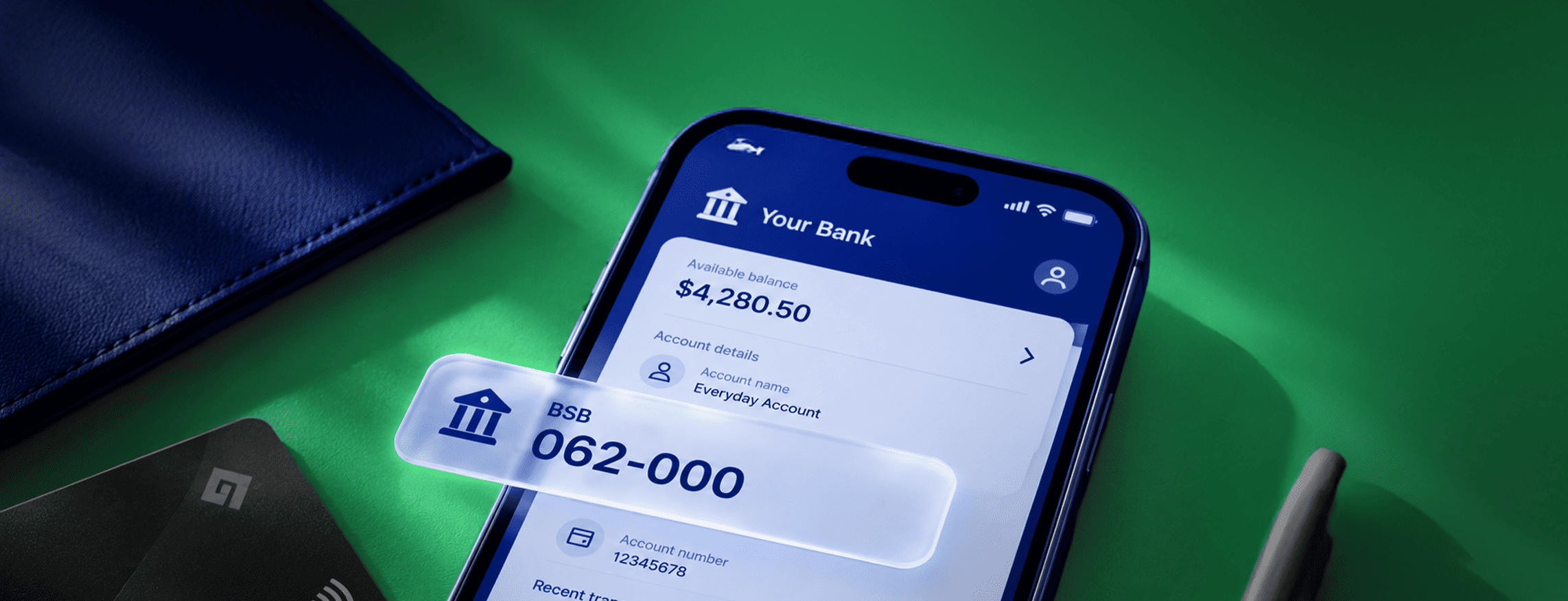
If you have an Australian bank account, you've probably come across a BSB number when making or receiving a bank transfer.
But what exactly is a BSB number, what does it mean, where can you find yours, and do you need one when receiving money from overseas?
A BSB is a six-digit number used to identify an Australian bank and branch or processing location. It is normally used together with an account number to route payments to the correct Australian bank account.
In this guide, we'll explain everything you need to know about BSB numbers, including how to find yours, how BSBs work, and the difference between a BSB, SWIFT code and IBAN.
Key Takeaways
- A BSB number is a six-digit code used to identify an Australian bank and branch or processing location.
- You normally use a BSB together with an Australian bank account number when making a domestic bank transfer.
- You can usually find your BSB in your banking app, online banking, account statement or by contacting your bank.
- A BSB is not the same as a SWIFT/BIC code or IBAN. BSBs are part of Australia's banking system, while SWIFT/BIC is used to identify financial institutions for international payments.
- If you're receiving money from overseas into Australia, you may need your BSB, account number and SWIFT/BIC, depending on the bank and transfer method.
- If you're using a service such as Pesa to receive or send money internationally, follow the receiving or payment details provided for the specific transaction rather than assuming you need to enter a BSB.
What Is a BSB Number?
BSB stands for Bank State Branch.
A BSB number is a six-digit code used to identify an Australian bank and its branch or processing location. It is used alongside an account number to route money to the correct Australian account.
A BSB is usually written in this format: XXX-XXX
For example: 062-001
The first six digits together identify the relevant banking institution and branch or processing location.
While BSB numbers traditionally relate to the bank, state and branch, you shouldn't try to work out a current BSB simply by interpreting individual digits. Some financial institutions use centralised BSBs rather than one unique code for every physical branch.
What is a BSB used for?
A BSB helps the Australian payment system determine where a payment should be routed.
When you make a domestic bank transfer, you will generally provide: BSB + account number + recipient name
The BSB identifies the bank or processing location, while the account number identifies the recipient's individual account.
Think of it as the banking equivalent of an address:
- BSB: identifies the bank/branch or processing location
- Account number: identifies the specific account
- Recipient name: identifies who the payment is intended for
What Does BSB Stand For?
BSB stands for: Bank State Branch
The term comes from the way Australia's banking system historically used the six-digit code to identify a bank, state and branch.
Today, however, the practical purpose is more important than trying to interpret every digit.
A BSB is essentially an Australian banking identifier used to route payments.
How Many Digits Is a BSB Number?
A BSB number has six digits.
It is commonly displayed with a hyphen: 123-456
You may also see it written without the hyphen: 123456
These represent the same six-digit BSB.
When entering a BSB into an online banking form, follow the format requested by the bank or payment provider.
How Does a BSB Number Work?
Suppose you want to transfer money to an Australian bank account.
You might be given:
BSB: 123-456
Account number: 12345678
The BSB helps identify the relevant financial institution or processing location.
The account number then identifies the specific account receiving the money.
The two pieces of information work together.
BSB vs Account Number
It's important not to confuse the two.
NB: You generally need both the BSB and account number to make a domestic payment to an Australian bank account.

Where Can I Find My BSB Number?
If you're trying to find your own BSB, you usually don't need to contact your bank.
There are several places you can check.
1. Your banking app
Most Australian banks display your BSB alongside your account number in the account details section.
Open your banking app and look for options such as:
- Account details
- Account information
- Bank details
- View account number
The exact location varies between banks.
2. Online banking
Log in to your bank's website and open the relevant account.
Your BSB will normally be displayed alongside your account number.
3. Bank statement
Your BSB may appear on your electronic or paper bank statement.
Look for your account details near the top of the statement.
4. Contact your bank
If you're unsure, contact your bank through its official website, app, phone service or branch.
5. Ask the recipient
If you're sending money to someone else's Australian account, the safest approach is usually to ask them to provide their current BSB and account number.
Don't guess.
Using incorrect banking details can result in a failed or delayed payment, and in some circumstances money may be sent to the wrong destination.
BSB Numbers for Major Australian Banks
Different Australian banks and financial institutions use different BSB numbers.
For example, BSB ranges commonly associated with some major Australian banks include:
NB: These are general identifiers, not a substitute for checking the exact BSB for an account.
A bank can have multiple BSBs, and some institutions use centralised BSBs. Always confirm the full six-digit BSB with the bank or recipient before making a payment.
Do You Need a BSB Number to Transfer Money in Australia?
For a typical domestic bank transfer to an Australian bank account, you'll generally need:
- Recipient's full name
- BSB number
- Account number
- Payment amount
- Reference, if required
For example, if your employer needs to pay your salary into your Australian bank account, you'll normally provide your bank account details, including your BSB and account number.
Similarly, if you're paying rent or transferring money to another Australian bank account, you may be asked for the recipient's BSB and account number.
Is a BSB the Same as an Account Number?
No.
They serve different purposes.
BSB number
Identifies the Australian bank and branch or processing location.
Account number
Identifies the individual bank account.
You normally need both when making a domestic payment.
For example:
BSB: 012-345
Account number: 12345678
The BSB tells the payment system where to route the money, while the account number tells it which account should receive it.
Is a BSB the Same as a SWIFT Code?
No.
BSB and SWIFT/BIC codes are different identifiers used for different purposes.
A BSB is a six-digit Australian banking identifier used primarily for routing payments to Australian accounts.
A SWIFT/BIC code identifies a financial institution within the international SWIFT network and is used for cross-border payments.
Here's the simple difference:
So if someone asks for your SWIFT code, don't give them your BSB.
If they ask for your BSB, don't give them your SWIFT code.
Is a BSB the Same as an IBAN?
No.
An IBAN, or International Bank Account Number, is an international account-numbering system used in many countries.
Australia does not use IBANs for its domestic bank accounts.
This can become confusing when someone overseas is trying to send money to an Australian bank account.
They may ask you: "What is your IBAN?"
If your Australian bank account doesn't have an IBAN, don't invent one.
Instead, check the receiving instructions from your bank or money-transfer provider. Depending on the payment route, the sender may need your:
- Full name
- Australian account number
- BSB
- Bank name
- SWIFT/BIC code
- Address or other information
The exact requirements depend on the sending country, currency and payment provider.
Do You Need a BSB for International Transfers?
It depends on the direction and method of the transfer.
Sending money from Australia overseas
If you're sending money from an Australian bank account to another country, you generally won't use a BSB to identify the overseas bank.
The receiving country will have its own banking identifiers.
Depending on the destination, you may need:
- SWIFT/BIC
- IBAN
- Sort code
- Routing number
- Local bank code
- Account number
The exact requirements depend on the destination country.
Receiving money from overseas into Australia
If someone is sending money to your Australian bank account, they may need your BSB and account number, along with your bank's SWIFT/BIC code.
Wise, for example, states that BSB details can be used when sending money to an Australian account from overseas and that international transfers may also require a SWIFT code.
However, don't assume every international payment works exactly the same way.
Follow the receiving instructions provided by your bank or payment provider.

BSB vs IBAN vs SWIFT vs Sort Code
If you're dealing with international payments, you may come across several different banking codes.
Here's a simple comparison:
These aren't interchangeable.
If someone asks you for one of these codes, make sure you provide the correct one.
Can You Receive Money From Overseas With a BSB Number?
Yes, a BSB can form part of the information needed to receive money into an Australian bank account from overseas.
However, the sender may need additional information.
For example:
Recipient name: Your full name
Bank: Your Australian bank
BSB: 123-456
Account number: 12345678
SWIFT/BIC: Your bank's international identifier
The exact information required depends on the sending bank and transfer method.
If you're receiving an international payment, ask your Australian bank for its official incoming-payment instructions.
Receiving International Money With Pesa
If you're using Pesa to transfer money internationally, you don't necessarily need to work out which banking codes to enter yourself.
The receiving or payment details you need depend on the specific Pesa wallet, currency and transfer method.
Pesa supports multi-currency wallets and international money movement, allowing you to manage supported currencies from one account.
When adding money to an eligible Pesa wallet through a bank transfer, the relevant receiving details are provided within the Pesa app.
Why this matters
If someone is sending you money, don't assume that you should simply give them a BSB because you're in Australia.
First check the specific receiving details displayed in your Pesa account.
This is especially important for international transfers because the required information can differ depending on:
- Currency
- Sending country
- Receiving currency
- Payment method
- Financial institution
- Transfer route
Using the exact details provided by Pesa helps the sender use the correct payment information for your transaction.
Can You Find a BSB From an Account Number?
Generally, you shouldn't try to infer someone's BSB from their account number.
The account number and BSB are separate pieces of information.
If you're sending money to someone, ask them to provide: Their full name + BSB + account number
You can also check the relevant bank's official BSB information if you're trying to verify a known BSB.
Don't rely on an old online list when making a significant transfer.
What Happens If You Enter the Wrong BSB?
Entering an incorrect BSB can cause problems with a payment.
Depending on the error, the payment could:
- Fail
- Be delayed
- Be returned
- Potentially be sent to an unintended account
Wise recommends checking the BSB with the bank or recipient before sending because an incorrect BSB can result in a payment being cancelled or sent to the wrong destination.
If you've entered the wrong BSB
Contact your bank as soon as possible.
Give them:
- Amount transferred
- Date and time
- Recipient details
- BSB entered
- Account number entered
- Transaction/reference number
The sooner you contact the bank, the more information they may have available to investigate the payment.

Is It Safe to Share Your BSB and Account Number?
Your BSB and account number are commonly used to receive payments, so you may need to provide them to legitimate employers, businesses or people who are paying you.
However, treat your financial information carefully.
Never share:
- Online banking password
- PIN
- One-time authentication codes
- Card security codes
- Banking app login details
Only provide the information necessary for the payment.
If someone asks you for your banking login or security code so they can "send you money", that's a red flag.
WorldFirst notes that BSB and account details are generally used to make deposits, but recommends being careful about who receives your banking information and monitoring your account activity.
BSB Numbers for Businesses
BSB numbers aren't just for personal bank accounts.
Australian businesses use BSBs when receiving payments from customers, paying suppliers, receiving payroll and making other domestic transactions.
For example, a business invoice may include:
Account name: ABC Pty Ltd
BSB: 123-456
Account number: 12345678
If you're paying an Australian business, use the payment details provided on its invoice or official payment instructions.
If you're a business receiving international payments, you may need additional information such as a SWIFT/BIC code or alternative receiving details depending on the payment method.
BSB Numbers When Moving to Australia
If you've recently moved to Australia, you'll probably encounter BSB numbers when setting up your finances.
For example, your employer may ask you for:
- Bank name
- BSB
- Account number
You'll also encounter BSBs when:
- Paying rent
- Setting up direct debits
- Receiving your salary
- Paying bills
- Transferring money to friends
- Receiving domestic payments
If you're moving money from your previous country into Australia, however, the process can be different.
An international transfer may require your Australian BSB and account number, along with your bank's SWIFT/BIC or other receiving details.
BSB Number Frequently Asked Questions
1: What is a BSB number?
A BSB number is a six-digit Australian banking code used to identify a bank and branch or processing location. It is normally used together with an account number to route payments to an Australian bank account.
2: Where can I find my BSB number?
You can usually find your BSB in your bank's mobile app, online banking, account statement or by contacting your bank. If you're sending money to someone else, ask the recipient to provide their current BSB.
3: Is a BSB the same as an account number?
No. A BSB identifies the bank and branch or processing location, while the account number identifies the individual account.
4: Is a BSB the same as a SWIFT code?
No. A BSB is an Australian banking identifier, while a SWIFT/BIC code identifies a financial institution for international payments.
5: Do Australian bank accounts have IBAN numbers?
Australia does not use IBANs for its domestic bank accounts. For an international payment into Australia, the sender may instead need details such as your BSB, account number and SWIFT/BIC, depending on the transfer method.
Final Thoughts
A BSB number is one of the basic pieces of information you'll encounter when banking in Australia.
The simple version is:
BSB = identifies the Australian bank and branch or processing location.
Account number = identifies your individual account.
For a domestic Australian transfer, you'll generally need both.
For an international transfer, you may also need a SWIFT/BIC code and other information depending on the sending country and payment method.
And if you're using a service such as Pesa, always check the specific receiving or payment details provided in your account rather than assuming that a BSB is required.
Understanding the difference between BSB, account numbers, SWIFT/BIC and IBANs can save you from delays and incorrect payments, especially when you're moving money between Australia and other countries.
Related articles
See all



Think money
Think Pesa
From home to abroad, and everywhere in between. We’ll help you send, receive, and convert your money with ease.
Download the appDownload the app


Join thousands of users sending money
Scan the QR code below with your phone
and you’ll get a link to get started