

.svg)



Starting school in a new country is exciting, but it doesn’t always come with a handbook.
From figuring out a new education system and managing unexpected expenses to finding your favourite food from home, the experience of being an international student comes with its own set of challenges, lessons and memorable moments.
That’s why, this back-to-school season, we’re bringing you real stories from real students living and studying abroad. Through their experiences, we want to shine a light on what student life really looks like beyond the classroom. The things they wish they knew, the challenges they faced, the little wins, and the lessons they’ve picked up along the way.
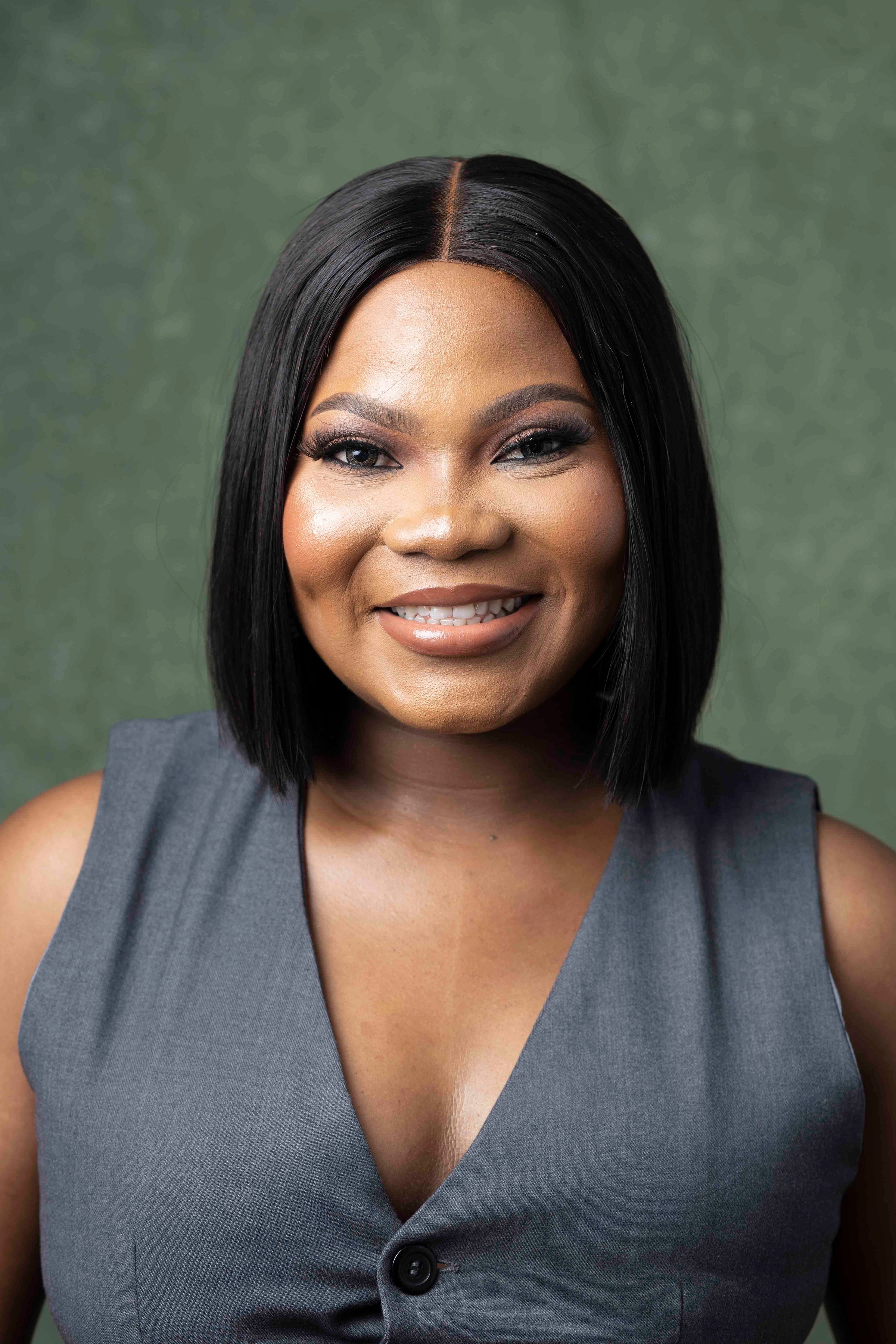
For this edition, we’re hearing from Funsho who shares her personal experience of studying in the UK from adjusting to a new school system to navigating life, money and everything in between.
Hi Funsho, please tell us a bit about yourself.
My name is Oluwafunso Omidiji, but everyone knows and calls me “Funso Waters”. I am from Oke-Igbo in Ondo State, and I did my MSc in Digital Marketing at the University of Chester, United Kingdom.I moved to the UK at the end of February 2025. I have always wanted to study abroad, but it always seemed like a tall goal, so out of reach. I almost convinced myself that it was no longer necessary. Honestly, there was no major plan to study abroad when I did. It was very spontaneous and happened within 3–4 months. No plans, no steps, just a tiredness of my environment, job and everything. I just wanted something new and fresh, and also not having “immediate” ties to Nigeria anymore fueled my decision.
What surprised you most about studying in the UK compared with your experience as a student in Nigeria?
I think the mindset and approach of the lecturers are so different. The lecturers here are more like, “What can I do to help you pass?” They are more interested in your success.
Unlike Nigerian lecturers, who derive joy in making your life difficult, they want to exercise authority and they are quick to let you know how many sets failed before you and why you are also going to fail. They say things like, “A is for me, B for my wife, C for my children, D for the smart ones, and the rest of you can have E and F.”
It’s such a warped mentality. You also have to mentally prepare yourself to approach a lecturer. Here, they are excited to set up a meeting with you if it concerns your academic success. It’s just different here.
What was one thing about studying in the UK that you had to learn as you went along?
They are quite strict on plagiarism here. You have to credit everything you say, and you can’t just lift things. Also, I am in my 30s, so I consider this adult education in a way (lol). You underestimate how your mind has aged. Your attention span is not as great anymore, you are more interested in surviving and making money, so studying here is also very difficult while trying to balance the responsibilities that come with adulting (bills, tuition, etc.).
Thinking back to your first semester, what was the biggest challenge you faced? Were there moments when you felt overwhelmed or wondered if you’d made the right decision?
I was honestly underwhelmed by the entire country when I arrived. I know we think Nigeria is bad, but I don’t think we are doing badly as a country. Take away insecurity, I was living a better life at home.
Also, your master’s degree isn’t even appreciated here as much. The entire process of moving to a new country and trying to hustle to pay your school fees is quite daunting. I would do things differently if given another chance.The truth is, every obstacle you face here would have you questioning your life choices (lol).
Beyond tuition and rent, what’s one expense that caught you completely by surprise?
I don’t necessarily think I was caught by surprise when it comes to expenses. Coming to a new country as a student, I already had bills to pay. I had paid 80% of my school fees with family and friends’ support.
My immediate expense was paying back my friends and completing my school fees. Finding a job immediately was hard. Even though I held on to my job in Nigeria till I got here, I soon realised that my problems were no longer in naira and I needed to focus on building a new life here, so I had to let my job go.
Tuition, rent and groceries were recurring bills I needed to constantly worry about. And also, after completing all of these payments, I had to start thinking of life post-study. It's just an unending cycle.
If you could only recommend one app or tool to a new international student, what would it be?
To be honest, I can’t think of any particular tool. The school usually provides tools that would help you in settling in as much as you can academically.
We had Turnitin, which helped with accounting for plagiarism and ensuring your thesis and assessments were well cited. I found platforms like SEMrush and SimilarWeb useful for my assessments as well.
I was doing a lot of digital marketing hypotheses, and I used some Nigerian-owned businesses as case studies, comparing their stats. It was fun comparing the backend of Cowrywise and PiggyVest as competitors.

Starting over in a new country can mean starting your social life from scratch too. How did you go from knowing no one to finding your people?
Meeting people was easy because of school. We were three Nigerians in my class, but building a social circle required intentionality.
I immediately joined a local church in Chester. At first, I wanted to avoid Black churches, because my mindset was that if you are in a different country, go to churches where you can meet locals. But God orchestrated my path to a Black-dominated church, and I immediately felt at home there.
I thought I was going to sample churches, but I didn’t need to. Everything I needed for that season was there for me.
I was also intentional about not just attending church but immediately becoming an active worker in church. I joined the media team, and they are my core circle now.
I was also intentional about telling all my employers from the interview stage that I don’t work on Sundays, just to keep that part of my life active.
So, to answer your question, it was easy to meet people, but building a social circle required intentionality.
I am still open to meeting new people because I won’t say I have successfully built consistent and intentional friendships. For now, my church community is my social life.
What was your job search like after moving? Did you find work as quickly as you expected, or did the process come with a few surprises?
Hmmm, let’s just say “kashamadupe”, more like “God no go shame us”.
The experience here is quite humbling. Every day I question my life choices. Why did I decide to uproot my life to start all over in my 30s?
Every employer here wants you to have at least 6 months’ UK experience. Brah, where do I get it from?
Coming from a country where I was managing over 5 people in my team, leading global communications across different African countries and having gotten to a stage in your career where you decide to go for a master’s degree with the belief that it would boost your career advancement and give you an extra edge to compete in the global market, you are met with the disappointment that it doesn’t count.
Your manager at work probably didn’t go to college. Some don’t even have the international exposure you’ve had or the diversity you’ve been exposed to.
The amount of “unfortunately” I have gotten since I got here… thank God that I have a strong sense of self, if not, I would have given up.
But I trust God. What everyone says to me is that it gets better, and recently, after ranting to my sister, she asked me, “Would you say last year was better than this year for you?”
And I said, “No, this year is better.”
And she said, “There you have it.”
There’s a certainty that next year will be better.
How did you find your first apartment after moving
It was a bit challenging finding an apartment in a city you’ve never been to and where you don’t know anyone.
I picked my school because it was one of the most affordable schools out of the 7 admissions I got. So, the first month, I commuted from Leeds to Chester. I found a stranger (a friend of my cousin’s friend) who was willing to allow me to stay in her house for a few days.
I used that time in Chester to walk around the city aimlessly. Most real estate agents have signage around homes, so I would take pictures and call them. Many of them didn’t want students; they preferred working-class people.
Believe me, finding an apartment eventually was God.
One day, I randomly told my stranger-friend that I loved her neighbourhood because it was a straightforward walk to school.
Days later, an agent reached out and asked if I was still looking for an apartment and guess what? It was a 3-minute walk from my friend’s house.
What are the odds?
Between lectures, work, making friends, and simply finding time for yourself, how did you keep everything from becoming too much?
Social life was almost zero. My social life was mostly church on Sunday.
Work life was difficult. I started with menial jobs. I would wake up at 6 a.m. to start a 7am–9am shift, and I would go to school after.
I underestimated studying in my adult years. I wished sometimes I could just focus solely on academics because I actually love school, but I couldn’t give 100% in school because I had a lot going on.
I had to figure out how to make money, get a good job, post-study, etc. But in all of this, a lot of people would still consider my journey great.
I am also grateful because now I’m done with school, and I finished well. But every season comes with its own challenges. Now the next stage is post-study, and that comes with a lot of uncertainties as well.
Being away from home for the first time can hit differently once the excitement of moving abroad starts to settle. How did you deal with homesickness during those first few months?
I honestly didn’t feel homesick. My immediate family no longer live in Nigeria. I was the last of my immediate family to jump on the japa bandwagon.
But I miss my life in Nigeria: the stability, the comfort I had and the progression of my career. I also miss my friends and my community.
But I have always been an independent person, and I love my space, so I’m fine on that end.
Starting over is difficult, but I’m grateful that God keeps sending me little reassurances here and there when I feel exhausted.
Looking back, what’s one thing you wish you had packed more of or something you wish someone had told you to bring before you left?
I honestly miss eating amala, gbegiri and ewedu. There’s this Bukka Hut ram suya, omg! Using that to make Indomie, or Daystar anointed asun.
I miss my favourite spot in Ogudu, Hotcrust Café. My friend owns it, and I loved their tomato pasta. Gosh, I’m not even a foodie like that, but I like what I like lol.
What’s one moment since moving here that made you realise just how far you’ve come?
My resilience.
I walked around the city centre pitching myself to shops and landed a social media job while doing it… lol.
I finished my master’s degree with zero debt, tuition paid in full. Even though I owe my siblings, but let’s be honest, they are not getting their money back… lol.
I started a mobile videography business, even on a small scale, but it’s something.
I moved from a shared apartment to an ensuite. These are small things, but they are big to me.
Uprooting your life and starting all over again is not easy, but I’m still pushing.

Was there a moment when you suddenly stopped feeling like a newcomer and thought, “Wow, I actually live here now”?
The first cold I experienced was the “aha” moment I needed to know I’m here now.
I still frolic with the idea of coming back home or moving to a new country when it gets tough and uncertain here, but I don’t know my next move.
I just want to be wherever God wants me to be, and for now, I am here, and I am grateful to be here.
If you could give a newcomer one money tip before starting school abroad, what would you tell them?
No matter where you are coming from, maximise your vocational skills to make extra money: makeup, barbing, nails, videography, photography, content creation, etc.
You have limitations with the hours you can work as a student. Minimum wage is £12.71. Multiply that by 20 hours of work, and you barely have enough to pay your monthly rent and buy groceries, talk less of paying your tuition.
So your vocational skills will help.
Related articles
See all



Think money
Think Pesa
From home to abroad, and everywhere in between. We’ll help you send, receive, and convert your money with ease.
Download the appDownload the app


Join thousands of users sending money
Scan the QR code below with your phone
and you’ll get a link to get started

